







January 30, 2026
5 Signs It’s Time to Replace Your Commercial Bed Linen
Commercial bed linen is a core operational asset for accommodation providers, facilities managers, and commercial laundries. When linen quality declines, the impact shows up quickly, through hygiene risk, higher laundry costs, inconsistent presentation, and avoidable replacements. For large-scale operators, these issues affect more than appearance. They affect compliance, efficiency, and total cost of ownership.
Knowing when to replace commercial bed linen allows procurement and operations teams to stay ahead of these risks and maintain consistent performance across rooms, sites, and locations.
Key Points
- Declining commercial bed linen quality increases operational and hygiene risk
- Visible wear, staining, and comfort loss signal fabric breakdown
- Inconsistent linen presentation reflects poorly on professional accommodation operations
- Replacing linen at the right time reduces long-term laundry and replacement costs
The Operational Impact of Poor Commercial Linen Quality
Worn or underperforming commercial bed linen creates issues that extend well beyond visual condition. Repeated industrial washing places significant stress on fibres, seams, and finishes. Once linen degrades, it becomes harder to clean effectively, dries less efficiently, and fails more frequently during processing.
When commercial bed linen reaches the end of its service life, it becomes harder to clean effectively and maintain hygiene standards, even when laundering processes remain compliant. This increases operational risk and rewash frequency.
For accommodation operators, this can lead to:
- Higher reject rates during laundry checks
- Increased rewash cycles, driving up water, energy, and labour use
- Inconsistent room standards across sites
- More frequent unplanned linen purchases
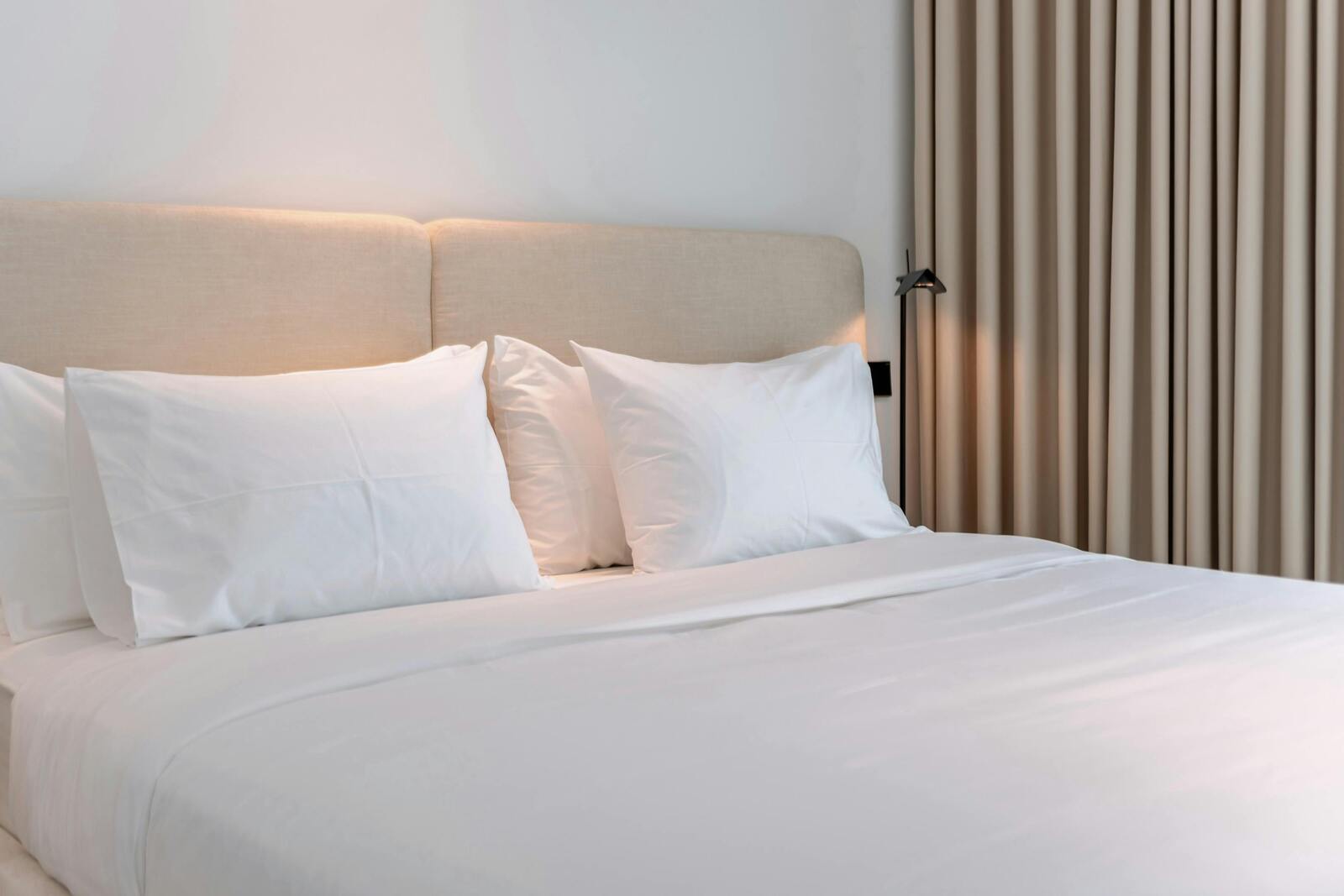
Signs Your Commercial Bed Linen Needs Replacing
1. Visible Wear and Tear
Fraying hems, thinning fabric, seam failure, and surface pilling are clear indicators that commercial bed linen is breaking down. These issues occur as fibres weaken after repeated high-temperature washing and mechanical drying.
As fibre strength declines, commercial bed linen becomes more prone to tearing during processing, increasing replacement frequency and operational downtime.
2. Persistent Stains That Won’t Lift
When stains remain after professional laundering, it often signals fibre degradation rather than poor washing performance. As fibres break down, they trap soils more easily and release them less effectively during wash cycles.
This reduces hygiene confidence and increases rewash rates, particularly in high-turnover accommodation and facilities environments.
3. Loss of Comfort and Performance
Commercial bed linen that has reached the end of its lifespan often feels flat, coarse, or less breathable. This occurs as yarn structure weakens and finishes wear away.
Loss of comfort affects perceived room quality and overall accommodation experience, even when linen still appears visually acceptable.
4. Inconsistent Presentation Across Rooms or Sites
Mixed linen conditions across rooms or locations create inconsistency that is difficult to manage operationally. Variations in fabric thickness, colour, and drape often result from partial replacements over time.
For multi-site operators, this inconsistency complicates procurement, stock control, and quality assurance. Standardised replacement programs help maintain uniform presentation and simplify inventory management.
5. Increased Replacement and Laundry Issues
Frequent tearing, shrinking, lint shedding, or failed wash cycles are strong indicators that linen is no longer suitable for commercial use. At this stage, ongoing repairs and rewashes typically cost more than planned replacement.
Proactive linen replacement reduces total textile costs by minimising emergency purchases and unplanned downtime.

Why Upgrading to Better Commercial Bed Linen Delivers Long-Term Value
Higher-quality commercial bed linen is engineered to withstand repeated industrial laundering while maintaining structure, comfort, and appearance. Over time, this reduces the total cost of ownership by extending service life and lowering processing failures.
Durable hospitality bed linen also supports:
- Lower rewash and reject rates
- Improved hygiene confidence
- Consistent sizing and presentation
- Predictable replacement cycles
Well-specified commercial linen supplies help procurement teams plan budgets more accurately and avoid reactive purchasing.
Tips for Choosing the Right Commercial Bed Linen
When selecting commercial bed linen, focus on performance rather than initial price. Key considerations include:
- Fabric construction designed for industrial washing
- Proven durability across high-temperature cycles
- Consistent sizing and shrinkage control
- Supplier reliability and national availability
- Compliance with relevant quality and safety standards
Evaluating commercial bed linen based on lifecycle performance rather than upfront cost helps reduce long-term operational spend.
Ready to Review or Upgrade Your Commercial Bed Linen?
If your current linen is showing signs of wear, inconsistency, or reduced performance, a planned replacement can help reduce operational risk and improve long-term efficiency.
Polesy supplies fit-for-purpose commercial bed linen designed for high-volume accommodation, facilities, and laundry environments, with reliable national availability and consistent specifications.
To discuss your requirements or review suitable options, speak with our team today.
Frequently Asked Questions
1. How often should commercial bed linen be replaced?
Replacement cycles vary depending on fabric quality, laundering conditions, and usage intensity. In most commercial environments, bed linen is replaced on a planned cycle aligned with laundering volume and performance decline.
2. What fabrics perform best in industrial laundry environments?
Blended cotton fabrics and purpose-designed commercial textiles generally perform better under high-temperature washing, balancing durability, breathability, and shrinkage control.
3. How does linen quality affect commercial laundry costs?
Lower-quality linen increases rewash rates, drying times, and replacement frequency. Durable commercial bed linen helps reduce processing costs over its service life.
4. What is the difference between hospitality bed linen and standard linen?
Hospitality bed linen is engineered for frequent washing, higher temperatures, and consistent presentation. Standard linen is not designed to withstand the same level of mechanical and thermal stress.
5. How can procurement teams standardise linen across multiple sites?
Standardisation starts with selecting consistent specifications and working with a supplier that can support national distribution. This approach simplifies inventory control and ensures uniform presentation across locations.